Stemtree of Spring TX: Engineering Classes for Curious Minds
Spring is a town built on the promise of possibility. The science center across the street from my house had a display about bridges that would wobble if you tapped the wrong nail, and a neighbor kid spent the afternoon tinkering with a homemade wind turbine in the garage. Those moments are not accidents. They are signs that curiosity prefers hands on experience to rote instruction and that a good class can turn a curious kid into someone who thinks in systems, tests hypotheses, and learns to fail without fear. In Spring, the local landscape is crowded with options for stem education, but Stemtree of Spring TX distinguishes itself by offering engineering classes for kids that blend craft, calculation, and real world problem solving. The result is not a single skill set but a mindset shift: from asking what is this to how can we make it work better.
The first time I walked into the Stemtree classroom, I expected a quiet room of quiet kids, the kind of place where pencils sharpened with reverence and every sentence ended with a precise explanation. What I found instead was a room that felt like a workshop perched on the edge of a curious imagination. There were three long tables with peg boards, a wall of labeled bins containing gears and wheels, and a whiteboard that looked less like a blackboard and more like a map of possibilities. The teacher spoke about pressure, torque, and tolerance in the same breath, as if they were talking about soccer drills or a music lesson. The students listened, then immediately started testing a small robot arm to pick up a plastic block, adjusting the grip, tracing measurement lines in dry erase, and narrating the what ifs aloud as they worked.
Between classrooms and curriculum, Stemtree of Spring TX aims to deliver more than the sort of knowledge that sits on a page. Its engineering classes for kids are built to cultivate a problem solving posture—one that treats a failed attempt as essential data rather than a verdict. The approach stands in contrast to the more common, drama of competition found in some after school robotics teams. Competitions have their place, but here the emphasis is not on the loudest victory or the most elegant poster, but on the quiet art of iterative improvement. Over months, students learn to frame questions, to hypothesize a design, to test it, to measure the result, to interpret data, and to revise. It is a cycle that, when practiced early, guides them toward confidence in the uncertain zones of science and engineering.
The practical benefits extend beyond the workbench. When kids learn to sketch a system, build a model, and run controlled experiments, they develop a language for thinking that transfers to math, reading comprehension, and even social collaboration. A child who can explain why a lever arm requires less force can also explain a story's main idea with greater clarity. A group that designs a small solar charger together cultivates not only technical literacy but collaborative discipline, a skill that will matter in any future workplace. Stemtree’s engineering classes for kids thus function as a bridge between curiosity and discipline, between daydreams about rockets and the nuts and bolts of how to land a helicopter safely on a rooftop model.
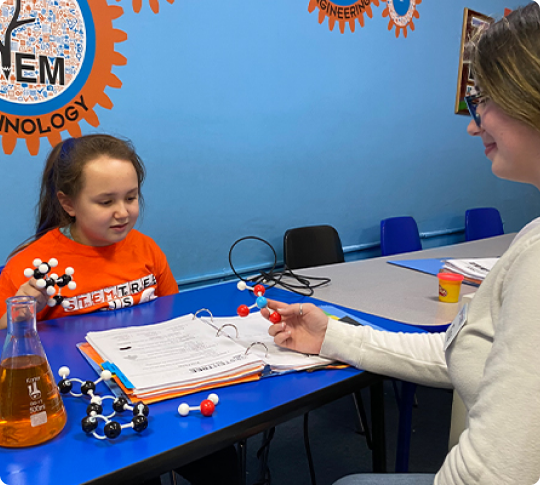
To understand the appeal, it helps to look at the structure of a typical program at Stemtree of Spring TX. The curriculum leans toward project based learning, where a challenge acts as the anchor for exploration rather than a traditional lesson plan. A project http://www.stemtree.com/springtx might begin with a broad goal—build a wind powered vehicle, design a water filtration system, or create a simple robotic gripper. The instructor outlines safety guidelines, materials available, and the core constraints: budget, time, weight, or size. Then the room becomes a tempo of exploration. Students sketch, measure, test, and iterate, often documenting their process in a shared notebook or a digital log. They learn to justify design decisions with data, not opinions, and to pivot when an idea proves impractical.
In engineering classes for kids at Stemtree, there is a clear, methodical rhythm: define the problem, brainstorm possible solutions, select a design, build a prototype, test under controlled conditions, analyze the results, and refine. But the reality of a busy workshop means the rhythm sometimes shifts. A student may abandon a plan mid stream to pursue an alternative that proves more interesting or promising. A mentor may propose a different material with new properties, inviting the class to reason about material science in a way that feels tangible rather than theoretical. The flexibility is important. It respects the fact that kids learn in bursts, often chasing a thread that leads to a surprising insight.
One of the remarkable aspects of Stemtree’s engineering classes for kids is how the content models a professional workflow without feeling mechanistic. If you spend a morning watching a group attempt to design a simple exoskeleton for a toy figure, you witness more than technical learning. You witness the birth of professional habits: careful documentation, transparent communication within a team, and a shared standard for evaluating results. Students learn to ask for feedback, to critique a peer’s plan constructively, and to receive criticism with curiosity rather than defensiveness. That dynamic—where students push one another toward better ideas while the teacher provides guidance rather than dictation—produces a classroom climate that is as important as the projects themselves.
Yet the real test of any program is how it translates into lasting skills. In STEM education, a child who learns to prototype a mechanism and iterate quickly develops more flexible problem solving. They begin to see engineering not as a solitary act performed by prodigies but as a collaborative craft that grows through revision. They understand that constraints often drive creativity: a narrow budget can force clever use of off the shelf components; limited space can inspire compact, multi function designs; a timeline can turn a long term plan into a series of rapid experiments. When students graduate from a term with a working model and a notebook full of measured observations, that is when the learning sticks. The boy or girl who built a solar powered cart and then explained the effect of changing the tilt angle of the solar panel on output has not just a tangible artifact but a mental map of cause and effect.
If you are a parent or caregiver evaluating a program like Stemtree, you want clarity on several fronts. Safety remains a baseline expectation. In a class that involves small components, fast moving parts, and electricity, robust safety training is essential. But beyond that, you want to know how a program nurtures independence while providing timely support. Does the teacher offer just enough scaffolding to keep a project progressing, or does support become a barrier to independent thought? Stemtree appears to strike a balance. The instructors act as mentors who intervene with a question rather than a direct solution. They invite students to verbalize their reasoning, to justify each design choice, and to anticipate potential failure modes before the prototype leaves the drawing board.
Another hallmark is accessibility paired with rigor. The best stem programs for kids recognize that arithmetic fluency, spatial reasoning, and observational skills grow at different speeds for different children. Stemtree’s engineering classes for kids seem to offer pathways that accommodate this variation. Some students dive into the math behind the design, calculating torques and moments to optimize performance. Others may focus more on the mechanical aspects, such as how a pulley system translates motion and how friction affects efficiency. In either case, the work remains anchored in real world outcomes rather than abstract theory alone. That blend helps sustain motivation for students who respond to different kinds of challenges.
Of course there are trade offs and edge cases to consider. Engineering projects can push students into gritty, stubborn corners where ideas stall. A design that seems elegant on paper may fail under a real world constraint such as imperfect materials or uneven surfaces. In those moments, the value is not just in achieving a perfect result, but in the process: documenting the missteps, diagnosing the root causes, and re framing the problem so the team can move forward with a stronger sense of purpose. Some students relish cycles of trial and error, while others may get discouraged if a failure lingers too long. A strong program, then, must provide strategies to mitigate frustration, such as clear interim goals, visible progress markers, and opportunities to switch tasks if fatigue or confusion sets in. Stemtree’s capacity to navigate these moments with patience and practical guidance often differentiates a good experience from a great one.
To give a more concrete sense of what a semester in Stemtree’s engineering series can feel like, consider a typical progression through a multi week project. The class begins with a hands on exploration of a specific engineering principle. It could be the relationship between leverage and range of motion or a deeper dive into simple machines such as inclined planes or wedges. The mentor demonstrates a quick, low risk prototype that exemplifies the concept, and then students are invited to replicate it with their own materials. This phase is crucial for building a shared vocabulary and for ensuring that everyone understands the basic physics at play. After the initial exploration, students are asked to draft a design brief. The brief should articulate the problem, the constraints, the proposed approach, and a plan for testing. The act of writing the brief forces a student to articulate assumptions and to think ahead about how they will measure success.
With a plan in hand, the class enters the build phase. Here the room becomes a flurry of tool use, careful measurement, and cooperative problem solving. The mentors circulate, pausing to ask pointed questions: Where does the force apply, and how will you quantify its effect? What tolerance do you need to maintain for your prototype to function reliably? How will you ensure your test is fair and repeatable? The best moments come when students realize that a tweak in a single parameter can ripple through the entire system, altering performance in surprising ways. This is precisely the kind of understanding that makes a child ready for higher level studies, whether in engineering, physics, or even economics.
As the project nears its end, the emphasis shifts toward evaluation and communication. Teams present what they built, the data they gathered, and the conclusions they drew from that data. They practice explaining the logic behind their design decisions without relying on buzzwords or vague statements. They defend their choices with evidence, anticipate potential failures, and outline next steps for improvement. The process teaches both technical literacy and the soft skills that matter in any field: clarity of thought, persuasive yet honest communication, and a willingness to adapt under scrutiny.
The culture of the classroom matters as much as the content. An environment that respects curiosity invites a student to take ownership of their learning. That ownership shows up in small ways, like a student choosing to document a failure in the lab notebook not as something to be hidden but as an observation to be shared with the group. It shows up in larger ways as well, when a student volunteers to lead a portion of a discussion or to propose a revision strategy after a test result reveals a discrepancy. It is this kind of culture—the mix of accountability, collaboration, and curiosity—that often makes Stemtree’s engineering classes for kids transformative, not merely educational.
The broader community around Stemtree matters too. In Spring, families have a range of options for enrichment, from community college outreach programs to after school robotics clubs. The advantage of Stemtree lies in its consistency and its emphasis on durable skills. A family can expect to see the same expectations for quality across sessions, with a gradual increase in complexity that aligns with a child’s growing capabilities. The programs are designed to scale without sacrificing the essential elements that make them effective: hands on engagement, a transparent planning process, and mentors who treat mistakes as essential steps toward mastery.
If you are weighing Stemtree among other offerings in Spring TX, here are a few practical angles to consider. First, assess the level of mentorship. A truly effective program pairs students with instructors who can adjust the level of guidance to the learner’s pace. Some kids progress quickly when given space to invent, while others benefit from more structured prompts that nudge them toward a solution. Second, examine the project variety. A strong engineering track will cover a spectrum of domains, from mechanical design to basic electronics to sensor driven experimentation. A well rounded approach helps students discover early where their interests lie and where their strengths emerge. Third, look at the documentation habit. Projects that include a written or digital log foster the habit of reflection and evidence based reasoning. This is a skill that pays dividends when students encounter more formal science classes later. Fourth, consider the alignment with math concepts. Engineering projects provide a natural laboratory for algebra, geometry, and even statistics. Programs that intentionally weave math into the design work tend to produce better long term outcomes for students who will face more advanced coursework down the road. Fifth, evaluate the flexibility for families. Consistency matters, but so does convenience. Programs that offer a range of scheduling options, from weekday evenings to weekend sessions, make it easier for kids to stay engaged without burning out.
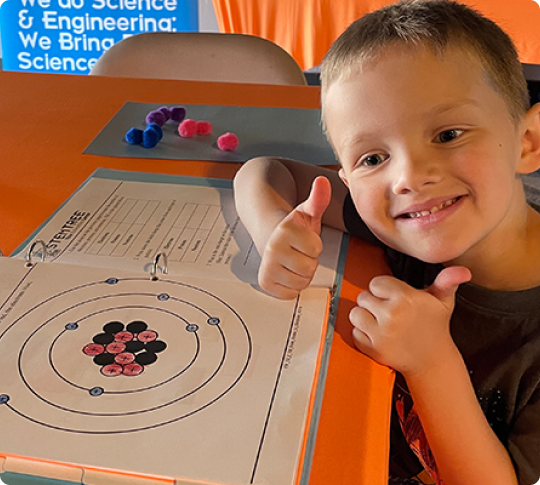
Beyond the mechanics of the course, there is a deeper philosophical dimension to Stemtree’s approach. It invites a posture toward learning that many families want but often struggle to cultivate at home: the willingness to test ideas, to measure results, and to iterate not just when things go well but precisely when they do not. There is a quiet pleasure in seeing a student who had once accepted a limitation in their thinking begin to push back against it. They might declare that a certain mechanism cannot work, only to discover, through a careful test and a revised assumption, that the obstacle was not the concept but the configuration of the parts. The shift from avoidance of failure to purposeful iteration is a powerful change in how a child experiences schoolwork and discovery.
The conversation around engineering education for kids is often weighted toward speed and spectacle—the loudest project, the flashiest design, the fastest solution. Stemtree of Spring TX resists that impulse by emphasizing process as much as product. A well crafted plan, a careful build, and a disciplined evaluation can produce outcomes that far outlive the project itself. Students carry away not just a finished model but a method: how to approach a problem, how to chart a path from hypothesis to conclusion, how to adjust when things do not go as planned. Those are the kinds of competencies that matter in any field, especially those that demand collaborative problem solving and iterative development.
As a parent or guardian, you may still wonder what it would be like to see your child grow through this kind of experience. The best way to imagine the impact is to picture a year from now rather than a month from now. A child who began with a little hesitation in a group setting may, by the end, lead an informal critique, propose a redesign for a stubborn prototype, and volunteer to help peers test their own ideas. You might notice improvements in other areas as well. The same careful communication that governs a lab notebook can improve how your child explains a story in writing assignments or presents a science fair project. A sense of craftsmanship can spread from the bench to everyday tasks such as organizing school materials, planning a homework schedule, or preparing for a math test.
The real value of Stemtree’s engineering classes for kids is not solely the set of skills a student walks away with, but the perspective they gain along the way. They begin to see engineering challenges as puzzles with many potential pathways, rather than commands handed down from a teacher. They learn that data matters and that a thoughtful design process can create tangible improvements, even when the final product is imperfect. They understand that collaboration improves ideas, and that listening to others may reveal a path they had not considered. In short, they discover a way of thinking that positions them to continue learning long after the class ends.
If you are curious about how to begin or deepen your child’s journey with Stemtree, consider a few practical steps. Start with a no pressure visit to observe a class in action, if possible. Watch how students frame questions, how mentors facilitate rather than dictate, and how teams negotiate disagreements. Bring a notebook to record questions that arise during the session. Afterward, reflect on what your child enjoyed most and what challenged them. Was it a matter of puzzling through a design constraint, or did they light up when a particular concept clicked? Gather these threads and discuss them with your child in a low key way. The aim is not to pressure them into a path but to invite them to explore a realm where curiosity is the currency and resilience the trade.
Finally, a note on timing. Engineering projects require sustained attention, but they also benefit from a cadence that respects a young learner’s attention span. The best Stemtree experiences balance focused work periods with comfortable breaks for reflection or free experimentation. If a week feels too packed for a child, that is a signal to adapt. The goal is to build a habit and a positive association with the act of building, measuring, and thinking. A program that respects those rhythms will yield a stronger, longer lasting impact.
Two lists to guide your decision making
-
What parents look for in stem programs
-
a clear emphasis on safety and responsible lab practices
-
mentors who partner with students rather than presiding over them
-
projects that span a range of disciplines within engineering
-
opportunities to document progress and reflect on results
-
a culture that values curiosity, resilience, and collaboration
-
Key considerations when choosing a class
-
alignment with your child’s interests and your family schedule
-
the balance between step by step instruction and independent exploration
-
how feedback is delivered and how revision is integrated into the project cycle
-
the availability of diverse projects that connect math and science to real outcomes
-
the level of support for students who excel or who struggle
In the end, the question you are asking is this: will this experience leave a child stronger in their own thinking and more confident in their ability to act on that thinking? The evidence from families who have walked through Stemtree’s engineering classes for kids suggests that the answer is yes when the program is practiced with care, consistency, and a genuine respect for the wonder that brings kids into a classroom in the first place. The work of turning curiosity into capability is not quick, and it is not glamorous in the moment. It is, however, deeply satisfying for those who invest in it, and its effects tend to compound over time.
Spring Texas is a place where the future feels neighborly, not far away. The engineering classes at Stemtree help translate that feeling into a practical path: a path where a young learner learns to test a hypothesis, to learn from a mistake, and to keep going until a design meets the needs of the real world. It is the kind of education that does not just fill a portfolio with projects, but fills a learner with the confidence to shape what comes next. If your child carries questions about how things work, if they listen for the quiet hum of a machine and wonder how to make that hum more efficient, Stemtree of Spring TX offers a doorway into a habit of mind that can serve them well for years to come.